When AI Interviewed Me: What It Got Right—and What It Missed
A CMU student tests whether artificial intelligence can hold a real conversation and discovers what separates machine logic from human connection.
RECENT POST
William Diaz
10/19/20253 min read
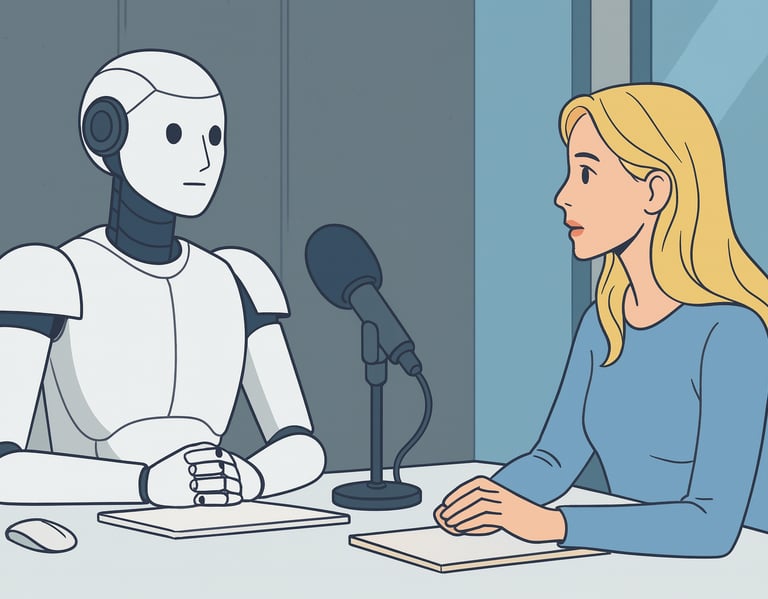
When I sat down to test artificial intelligence’s (ChatGPT) ability to conduct a real interview, I expected efficiency. After all, AI can generate essays, plan schedules, and even mimic conversation patterns—right? What I didn’t expect was how quickly the experiment would show me what it can’t do.
I asked the AI to “interview me like a journalist would” and told it to ask 20 questions, but It only asked five.
The questions weren’t bad—some were thoughtful—but something was missing. As I listened to the playback, I realized what human interviewers bring that AI doesn’t: curiosity. The kind that digs deeper when it senses emotion, verbal tone, or a story behind the story.
“If I were hiring someone to interview people,” I thought, “AI wouldn’t make the cut. It didn’t chase that golden nugget that journalism thrives on.”
Can AI Really Interview a Human?
The Golden Nugget — Communication as Connection
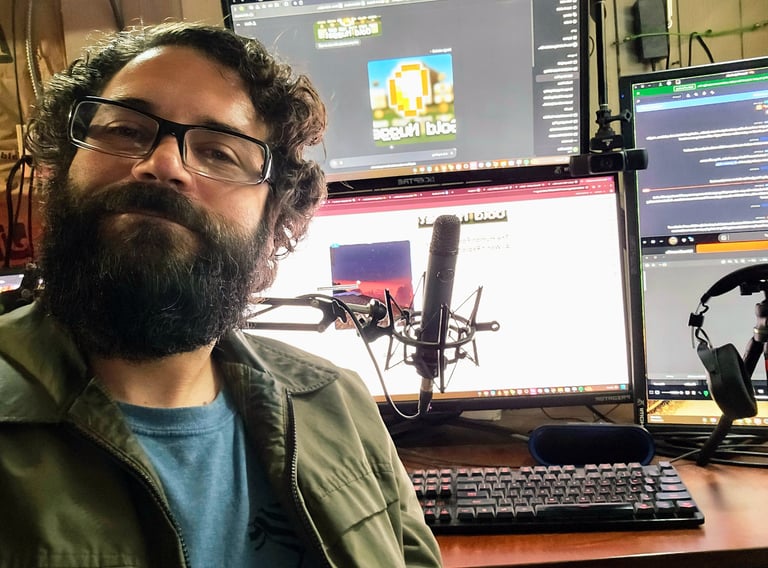
That golden nugget was communication itself. My YouTube channel, TNC Cuban, stands for Talk, Navigate, Create, but at its heart, it’s about human communication—the way we listen, respond, and build meaning together.
AI missed that theme entirely. It processed my words but didn’t feel my passion.
In Ryan Warner’s campus workshop on interviewing, he described what separates a real conversation from an exchange of questions.
“Interviewing is instant intimacy,” Warner said. “Most of the people I interview I’ve never met. And here I am, asking them to pour their heart out and tell me maybe about the worst day of their life or the best day of their life.”
That’s what AI couldn’t replicate. It didn’t create any instimacy, as Warner calls it—it couldn’t read emotion, pause for silence, or follow the spark of a new idea.
A human interviewer would’ve heard that my real passion wasn’t just creating videos—it was exploring how people connect through communication.


The Human Factor — Why AI Won’t Replace Us
Some people fear AI will replace journalists, creators, or even storytellers. After being on the other side of its “mic,” I’m not worried.
AI is a tool—a remarkable one—but still just a tool. Like the printing press, the internet, or the smartphone, it extends what we can do; it doesn’t replace who we are.
“Technology has always been a tool,” I said in the interview. “Cars, phones, the internet—all of it helps us connect, but it doesn’t replace the human mind or heart.”
Ryan Warner reinforced that same idea when he told students it’s okay to be genuine rather than perfect on air.
“Be vulnerable,” he said. “It’s okay not to know everything… Most of the time when you ask a question based on something you don’t understand, your audience will actually be grateful, because chances are they don’t understand it either.”
That kind of humility and connection—the willingness to not know—is something AI simply can’t experience.
The Takeaway — Embracing AI Without Losing Ourselves
My experiment didn’t fail—it revealed something I didn’t expect.
AI reminded me why I fell in love with communication in the first place. The machine’s lack of emotional depth made me more aware of my own voice, tone, and curiosity.
“It’s only capable of what we as humans are capable of doing,” I concluded. “And as long as we have one another, nothing’s going to surpass humanity.”
The lesson? Don’t fear AI. Use it. Learn from it. Let it challenge you to think more critically, write more clearly, and communicate more meaningfully.
Because the golden nugget isn’t the technology—it’s us.
